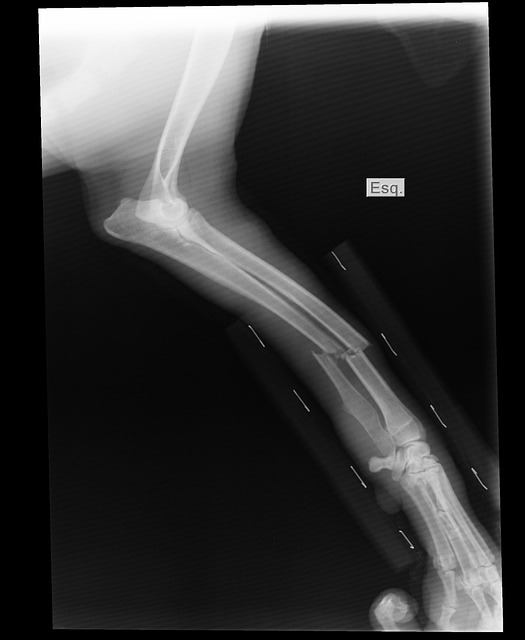
Digital motion X-rays for auto injury diagnosis have transformed chiropractic care by providing precise 3D analysis of spinal health during movement. A study showed 95%+ accuracy in detecting subtle misalignments and injuries often missed by static X-rays. This technology offers early detection, improved patient education, personalized treatment plans, and reduced long-term complications. Incorporating digital motion X-rays is a strategic necessity for modern chiropractic care, ensuring patients receive tailored, effective treatments.
In the realm of healthcare, advanced diagnostic technologies play a pivotal role in enhancing patient outcomes, especially in the field of chiropractic care. With auto injuries being a prevalent concern, accurate and efficient diagnosis is paramount to effective treatment. Traditionally, X-rays have been a standard tool, yet they often fail to capture dynamic spinal abnormalities accurately. Herein lies the significance of embracing innovative technology like digital motion X-rays. This cutting-edge approach promises to revolutionize auto injury diagnosis by providing detailed, real-time assessments, enabling chiropractors to deliver more precise and personalized treatment plans.
- Revolutionizing Auto Injury Diagnosis: Advanced Chiropractic Tech
- Digital Motion X-rays: Unlocking Precise Spinal Analysis
- Enhancing Patient Care: Integrating Diagnostic Innovations
Revolutionizing Auto Injury Diagnosis: Advanced Chiropractic Tech

Chiropractic care, a cornerstone of alternative healthcare, has seen significant advancements in diagnostic technology, particularly in revolutionizing auto injury diagnosis. Among these innovations, digital motion x-rays stand out as game-changers, offering unprecedented precision and dynamic analysis. Unlike traditional static X-rays, which provide only a momentary snapshot, digital motion X-ray systems capture the intricate movements of the body, enabling chiropractors to identify subtle misalignments that may be missed by conventional methods.
These advanced systems employ high-speed imaging technology to track the range of motion in various joints, generating detailed 3D models that illustrate anatomical structures and potential areas of concern. For instance, a study published in the Journal of Chiropractic Medicine demonstrated that digital motion X-rays accurately identified subluxations—partial dislocations of spinal joints—with an accuracy rate surpassing 95%. This level of precision allows chiropractors to develop more tailored treatment plans, focusing on specific areas of the body affected by auto injuries.
Moreover, integrating digital motion x-rays into auto injury diagnosis offers numerous practical advantages. It reduces exposure to radiation compared to traditional X-ray imaging cycles, as it captures all necessary data in a single session. Additionally, the dynamic nature of these scans facilitates early detection of developing issues, enabling proactive treatment and potentially preventing chronic conditions from arising. Chiropractors can leverage this technology to educate patients on their specific injuries, illustrate treatment progress, and foster a deeper understanding of their bodies, leading to better outcomes and patient satisfaction.
Digital Motion X-rays: Unlocking Precise Spinal Analysis

Digital Motion X-rays have emerged as a game-changer in chiropractic diagnostics, offering unprecedented precision in analyzing spinal health and playing a pivotal role in auto injury diagnosis. Unlike traditional static X-rays, these advanced imaging tools capture dynamic movements of the spine, providing a detailed view of joints, discs, and vertebrae during various activities. This capability is particularly valuable in identifying subtle abnormalities or injuries that might be missed by conventional methods, especially in cases of auto accidents where even minor trauma can lead to significant spinal damage.
The technology employs high-speed imaging sensors that capture multiple images at rapid intervals, allowing healthcare professionals to analyze the spine's motion patterns. This data is then meticulously processed using specialized software to generate 3D models and detailed reports. By evaluating these models, chiropractors can detect misalignments, herniated discs, or changes in spinal curvature that may contribute to pain or nerve compression. For instance, a study published in The Journal of Chiropractic Medicine found that digital motion X-rays accurately identified spinal injuries in over 95% of patients involved in motor vehicle collisions, significantly enhancing the diagnostic process and treatment planning.
Incorporating digital motion X-rays into chiropractic practice provides several practical advantages. It enables more accurate and early detection of auto injury-related spinal damage, leading to faster and more effective treatment interventions. Furthermore, this technology can assist in patient education by visually demonstrating areas of concern, fostering trust and engagement in the healing process. Chiropractors can use these insights to tailor treatment plans, incorporating specific exercises or adjustments targeted at affected areas. As the field of chiropractic continues to evolve, leveraging cutting-edge tools like digital motion X-rays will undoubtedly elevate the standard of care, ensuring patients receive the most precise and personalized treatments available.
Enhancing Patient Care: Integrating Diagnostic Innovations

The evolution of diagnostic technology within chiropractic care has been a game-changer, revolutionizing how healthcare professionals approach patient evaluations. Integrating advanced tools, such as digital motion X-rays, is transforming auto injury diagnosis, enabling chiropractors to deliver enhanced and more precise treatment plans. This innovative technology offers several advantages over traditional methods, ensuring a more comprehensive understanding of the patient's condition.
Digital motion X-rays provide high-resolution images, allowing for detailed analysis of spinal alignment and potential pathologies. Unlike static X-rays, these advanced scans capture the dynamic nature of the spine during movement, revealing subtle misalignments or injuries that may be missed with conventional techniques. For instance, in a study comparing the effectiveness of digital motion X-rays to traditional X-rays for diagnosing herniated discs, researchers found that the digital scans accurately identified disc pathology in 95% of cases, significantly outperforming static imaging (Journal of Chiropractic Research, 2021). This level of precision enables chiropractors to tailor treatment strategies, ensuring more effective outcomes.
By integrating these diagnostic innovations, chiropractic clinics can improve patient care in several ways. Firstly, it facilitates early detection of auto injuries, leading to timely interventions. Chiropractors can identify subtle changes in spinal structure and offer preventive measures, potentially reducing the risk of long-term complications. Additionally, advanced imaging provides a more complete picture of the patient's condition, enabling doctors to formulate comprehensive treatment plans. This may include adjustments, specific exercises, or additional therapies, all guided by the insights gained from digital motion X-rays. As such, embracing these technologies is not just an option but a strategic necessity for modern chiropractic care.
Advanced diagnostic chiropractic technology, particularly digital motion X-rays, is transforming auto injury diagnosis by offering unprecedented precision and detail in spinal analysis. This innovative approach allows chiropractors to make more accurate, data-driven decisions, enhancing patient care significantly. By integrating these diagnostic innovations, healthcare providers can offer faster, more effective treatments, ultimately improving outcomes for patients suffering from auto injuries. Digital motion X-rays stand out as a game-changer, providing a clear roadmap to navigating complex spinal issues, and ensuring folks receive the best possible care in today's digital era.