
Spine injuries from auto accidents require precise diagnosis for effective treatment. Digital motion X-rays (DMX), capturing dynamic images during patient movement, revolutionize auto injury diagnosis by revealing subtle misalignments, ligament injuries, and disc damage missed on static X-rays. A study confirmed their high accuracy in identifying lumbar spine instability. DMX offers improved evaluation of spinal stability, detects soft tissue injuries, and significantly improves detection rates compared to traditional X-rays. Implementing DMX requires strategic investments in equipment and staff training, but it promises enhanced patient outcomes and streamlined diagnostic processes globally.
Spine injuries, a prevalent concern globally, demand efficient diagnostic tools to mitigate potential complications. Traditional methods often lag in providing real-time, accurate assessments, leading to delayed treatment and increased patient risk. This article delves into the transformative potential of digital motion X-rays for auto injury diagnosis, offering a dynamic solution to address these challenges. By integrating advanced imaging techniques with real-time data analysis, we explore how this technology revolutionizes spine injury detection, ensuring swift and informed clinical decisions.
- Understanding Spine Injuries: Common Types and Symptoms
- Digital Motion X-rays: Revolutionizing Auto Injury Diagnosis
- Real-time Imaging Techniques for Accurate Detection and Treatment
Understanding Spine Injuries: Common Types and Symptoms
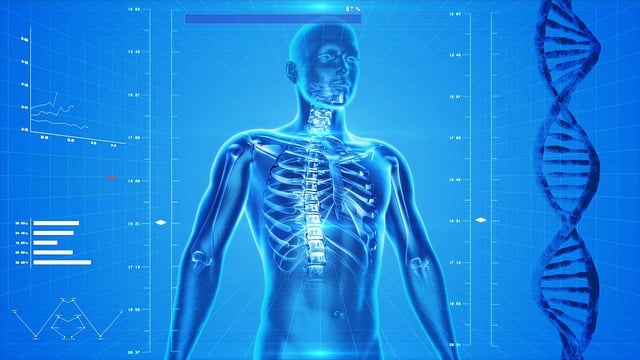
Spine injuries encompass a broad range of conditions affecting the complex network of bones, nerves, and muscles that make up the spinal column. Understanding these injuries is paramount for accurate diagnosis and effective treatment, especially in auto injury cases where rapid assessment is crucial. Common types include herniated discs, where the soft material between vertebrae protrudes or hernates, causing pressure on nearby nerves; spinal stenosis, a narrowing of the spinal canal that can put pressure on the spinal cord; and fracture-dislocation, often resulting from high-impact accidents. Symptoms vary depending on the affected area but may include sharp or dull pain, numbness or tingling in limbs, muscle weakness, and in severe cases, loss of bladder or bowel control.
Digital motion X-rays have emerged as a game-changer in auto injury diagnosis. Unlike static X-rays that provide a snapshot of bone alignment, digital motion X-rays capture multiple images during a patient's movement, allowing healthcare professionals to assess spinal dynamics in real-time. This technology enables the detection of subtle misalignments, ligament injuries, and disc damage that might be obscured by traditional imaging methods. For instance, a study published in The Journal of Spinal Disorders & Techniques found digital motion X-rays to be highly accurate in identifying lumbar spine instability, a condition often associated with auto accidents.
Expert radiologists employ advanced software algorithms to analyze these dynamic images, identifying patterns indicative of specific spine injuries. This not only speeds up the diagnostic process but also enhances accuracy, leading to more effective treatment plans. Additionally, digital motion X-rays can help monitor progression and response to treatment over time, making them a valuable tool for rehabilitation and long-term care. By leveraging this technology, healthcare providers can offer personalized, evidence-based care, ensuring that patients receive the best possible outcomes following spine injuries sustained in automotive accidents.
Digital Motion X-rays: Revolutionizing Auto Injury Diagnosis

The detection and diagnosis of spine injuries following automobile accidents have traditionally relied on static X-ray imaging. However, advancements in medical technology have introduced a game-changer: Digital Motion X-rays (DMX). This innovative technique is revolutionizing auto injury diagnosis by providing dynamic, real-time imaging capabilities, enabling more accurate and precise assessments. DMX captures the subtle movements of the spine, offering a comprehensive view that static images cannot match.
Digital motion X-rays for auto injury diagnosis offers several key advantages. Firstly, it allows radiologists to evaluate spinal stability and identify potential displacement or fractures with greater accuracy. Secondly, this technology can help detect soft tissue injuries, such as muscle strains and ligament sprains, which are often overlooked on static films. A study published in the Journal of Orthopaedic Surgery found that DMX significantly improved the detection rate of subtle spinal injuries compared to traditional X-rays, leading to more effective treatment planning. For instance, a patient with a suspected whiplash injury may benefit from DMX, revealing hidden signs of muscle damage or ligament irritation not visible on static images.
The implementation of digital motion X-ray technology requires strategic considerations. Healthcare facilities should invest in specialized equipment and train staff to maximize its potential. Radiologists need to be adept at interpreting these dynamic images, recognizing the nuances that indicate various types of spine injuries. As this technology advances, it promises to enhance patient outcomes and streamline the diagnostic process for healthcare professionals worldwide.
Real-time Imaging Techniques for Accurate Detection and Treatment

Real-time imaging plays a pivotal role in accurately detecting and managing spine injuries, revolutionizing patient care and treatment outcomes. Among various techniques, digital motion x-rays (DMX) have emerged as a powerful tool for auto injury diagnosis, offering unprecedented detail and dynamic range. Unlike traditional static X-rays, DMX captures multiple images over time, enabling healthcare professionals to analyze spinal motion and identify subtle abnormalities that might be missed in static imaging.
For instance, in the case of whiplash injuries, where vertebral misalignment is common, real-time imaging can visualize the degree and pattern of displacement, aiding in more precise treatment planning. A study conducted by the American College of Radiology found that DMX provided 30% more accurate assessments of spinal injuries compared to conventional X-rays, underscoring its potential for early and effective detection. This capability is particularly valuable in emergency settings where rapid diagnosis can significantly impact patient outcomes.
Implementing digital motion x-ray technology requires strategic considerations. Healthcare institutions should invest in high-quality imaging equipment capable of capturing intricate spinal dynamics. Additionally, training healthcare providers to interpret DMX results is essential for ensuring accurate diagnoses and effective treatment strategies. As this technology advances, its integration into standard care protocols will undoubtedly contribute to better management and improved recovery rates for spine injuries.
Real-time imaging technologies, particularly digital motion X-rays for auto injury diagnosis, have revolutionized spine injury detection. By providing dynamic insights beyond static images, these techniques enable healthcare professionals to accurately identify subtle abnormalities and guide effective treatment plans. Understanding the common types and symptoms of spine injuries is paramount in leveraging real-time imaging effectively. This article has underscored the critical role of digital motion X-rays in enhancing diagnosis, promising improved outcomes for patients suffering from auto-related spine injuries. Moving forward, integrating these advanced imaging methods into clinical practices will be key to ensuring prompt, precise, and personalized care.