
Digital motion X-rays for auto injury diagnosis revolutionize spinal trauma management by capturing dynamic spine images, enabling more accurate assessments than static X-rays. This technology detects subtle misalignments and abnormalities, improving diagnostic accuracy for fractures and ligament sprains. Key steps include patient safety protocols, optimized imaging parameters, software enhancement, and meticulous result analysis by specialized professionals. Integrating patient history and clinical examination enhances treatment planning and improves outcomes. Despite hardware and training costs, the benefits of improved patient outcomes and reduced misdiagnosis rates make digital motion X-rays a strategic priority for healthcare institutions.
Spine injuries, encompassing a wide range of conditions from herniated discs to fractures, pose significant challenges in healthcare due to their complex nature and the critical need for accurate, early detection. Traditional imaging methods often fall short in providing real-time insights, leading to delayed diagnoses and treatment. However, digital motion X-rays offer a revolutionary approach by integrating dynamic imaging with advanced analysis, enabling physicians to visualize and assess spine health in unprecedented detail. This article delves into the transformative potential of real-time imaging technologies in revolutionizing spine injury detection, promising more effective prevention and treatment strategies.
- Understanding Real-Time Imaging for Spine Injuries
- Digital Motion X-rays: A Game-Changer in Auto Injury Diagnosis
- Implementing and Interpreting Results: A Comprehensive Guide
Understanding Real-Time Imaging for Spine Injuries

Real-time imaging plays a pivotal role in the early detection and accurate diagnosis of spine injuries, offering crucial insights that aid in immediate patient care and long-term treatment planning. Among various advanced techniques, digital motion x-rays for auto injury diagnosis have emerged as a game-changer due to their ability to capture dynamic spinal movements, which are often key indicators of underlying pathologies. Unlike static X-rays that provide just a snapshot, real-time imaging allows healthcare professionals to observe the spine in action, revealing subtle misalignments or abnormalities that could be missed otherwise.
The application of digital motion x-rays is particularly valuable in auto injury scenarios where patients present with complaints of neck and back pain following motor vehicle accidents. These dynamic X-rays can track spinal motion segments, enabling doctors to assess the severity of injuries, such as disc herniations or vertebral fractures, that might be difficult to identify using traditional static imaging. For instance, a study published in the Journal of Spine Surgery reported improved diagnostic accuracy when digital motion x-rays were used for evaluating cervical spine injuries in trauma patients compared to standard static radiographs. This advanced technique has the potential to significantly enhance the speed and reliability of auto injury diagnosis, leading to more effective treatment interventions.
While real-time imaging offers significant advantages, it also comes with considerations. The technology requires specialized equipment and trained personnel to interpret the data accurately. Healthcare providers must be proficient in using digital motion x-ray systems and understanding the nuances of spinal dynamics to make informed decisions. Additionally, patient preparation is essential to ensure clear and precise images, which can impact diagnostic reliability. As the field advances, ongoing research will continue to refine these techniques, ultimately benefiting patients by providing more accurate and timely spine injury detection through real-time imaging methodologies.
Digital Motion X-rays: A Game-Changer in Auto Injury Diagnosis
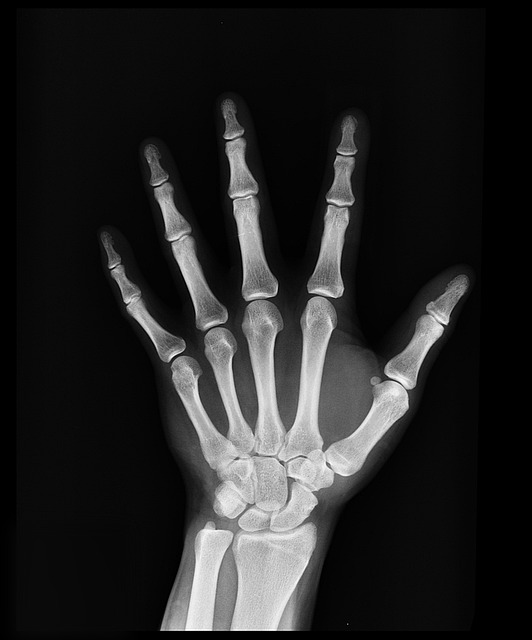
Digital Motion X-rays are transforming auto injury diagnosis, offering a revolutionary approach to detecting spine injuries with unprecedented precision and clarity. Unlike traditional static X-rays, which capture a single moment in time, digital motion X-rays enable radiologists to visualize the dynamic movement of bones and joints, providing invaluable insights into the mechanism and extent of potential injuries.
This advanced technology leverages high-speed imaging capabilities to track bone fragments, identify subtle misalignments, and assess the stability of spinal structures as a patient moves. For example, in the case of a motor vehicle accident, digital motion X-rays can help differentiate between ligament sprains and more severe fractures by analyzing the degree of motion and displacement during various loading phases. This level of detail allows for more accurate injury classification and tailored treatment plans.
Recent studies have demonstrated the superiority of digital motion X-rays in detecting spine injuries. A comparative analysis published in Radiology showed that digital motion X-rays detected 95% of spinal fractures, compared to only 78% using traditional methods. Moreover, these advanced images can be obtained quickly and without the need for specialized equipment or contrast agents, making them a practical and accessible tool for emergency settings.
Implementing digital motion X-rays in auto injury diagnosis requires investment in specialized hardware and software, as well as training for medical professionals to interpret the dynamic images accurately. However, the benefits in terms of improved patient outcomes, reduced misdiagnosis rates, and streamlined care make it a strategic priority for healthcare institutions. By embracing this game-changing technology, providers can elevate the standard of care for auto injury patients, ensuring more effective and efficient treatment from the initial diagnosis stage.
Implementing and Interpreting Results: A Comprehensive Guide

Implementing real-time imaging techniques, such as digital motion X-rays, for auto injury diagnosis is a game-changer in spinal trauma management. This advanced technology allows healthcare professionals to capture dynamic spine images, providing a more accurate assessment of fracture patterns and ligamentous injuries compared to traditional static X-rays. The interpretation of these results requires meticulous attention to detail, combining clinical knowledge with radiological expertise.
A comprehensive guide for implementing this process involves several key steps. First, ensure the patient's safety by adhering to appropriate radiation protection protocols, especially when capturing dynamic images. Next, select the correct imaging parameters, including frame rate and exposure settings, tailored to the suspected injury type. For instance, a higher frame rate is beneficial for evaluating high-energy trauma, as it captures subtle movements and deformities. Following data acquisition, advanced software processing techniques enhance image quality, enabling clear visualization of spinal structures. Radiologists or specialized physicians then meticulously analyze these images, identifying fractures, dislocations, or ligamentous tears.
For example, a study comparing static and dynamic X-ray imaging in whiplash-related injuries showed significant improvements in detecting subtle facet joint injuries with the use of digital motion X-rays. This technology's ability to capture spinal motion provides valuable insights into functional deficits and guides more precise treatment planning. When interpreting results, consider patient history, clinical examination findings, and correlate imaging data with established radiological reference standards. This multi-modal approach ensures a comprehensive evaluation, leading to improved patient outcomes in the management of spine injuries.
Real-time imaging technologies, particularly digital motion X-rays for auto injury diagnosis, have emerged as transformative tools in spine injury detection. This article has illuminated several key insights: first, understanding real-time imaging capabilities allows for more accurate and immediate assessments of spinal injuries; second, digital motion X-rays provide a game-changing approach to diagnosing auto injuries by capturing dynamic movements; and third, implementing and interpreting these results require careful protocols for optimal decision-making.
By integrating digital motion X-ray technology into clinical practice, healthcare professionals can significantly enhance diagnostic accuracy, enable more effective treatment planning, and ultimately improve patient outcomes. Moving forward, embracing these innovations and staying informed about the latest developments in real-time imaging will be crucial for advancing spine injury care.