
Spine injuries from trauma or degeneration require accurate diagnosis. Digital motion X-rays, capturing spinal movement, offer superior detection for misalignments, fractures, and spinal cord injuries compared to static X-rays. This technology revolutionizes auto injury diagnosis in emergency medicine, enabling faster triage, improved accuracy, and better patient outcomes. Strategic investments and specialized training are needed to integrate digital motion X-rays into standard diagnostic practices.
Spine injuries are a significant global health concern, with accurate and swift diagnosis crucial for effective treatment and prevention of complications. Traditional imaging methods often fail to capture dynamic spinal abnormalities in real-time, leading to misdiagnosis or delayed detection. This hinders timely interventions, particularly in emergency settings. Herein, we present the transformative potential of digital motion X-rays as a cutting-edge tool for auto injury diagnosis. By seamlessly integrating high-speed imaging with advanced analytics, this technology promises to revolutionize spine injury detection, enabling more accurate, rapid, and personalized patient care.
- Understanding Spine Injuries: Common Causes and Symptoms
- Digital Motion X-rays: Unlocking Real-time Imaging for Accurate Diagnosis
- Enhancing Auto Injury Care: Benefits and Future Prospects of Advanced Imaging
Understanding Spine Injuries: Common Causes and Symptoms
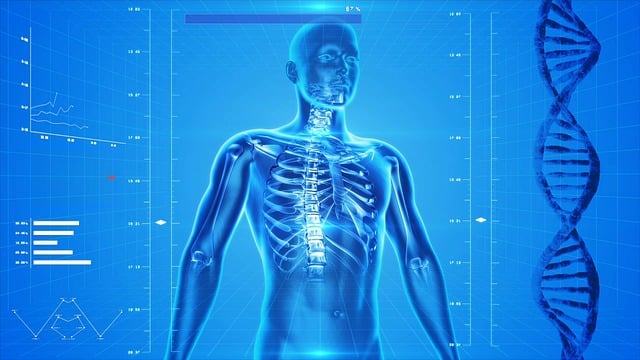
Spine injuries encompass a wide range of conditions affecting the cervical, thoracic, or lumbar regions of the spine, often resulting from trauma, degenerative disorders, or underlying medical conditions. Understanding these injuries is paramount in accurate diagnosis and effective treatment planning. Common causes include motor vehicle accidents, sports-related injuries, falls, and repetitive stress injuries from everyday activities or occupational demands. For instance, a study published in the Journal of Spinal Disorders & Techniques reported that motor vehicle collisions are the leading cause of spinal cord injuries, emphasizing the need for efficient injury detection methods.
Symptoms vary depending on the severity and location of the injury. They may include sharp or dull pain, numbness or tingling sensations, muscle weakness, spasms, and in severe cases, loss of bladder or bowel control. Digital motion x-rays have emerged as a valuable tool in auto injury diagnosis, offering dynamic imaging that reveals subtle misalignments or fractures not evident in static X-rays. This technology enables healthcare professionals to assess spinal stability and guide treatment decisions with enhanced precision. For example, research has shown that digital motion X-rays can detect subtle atlantoaxial instability, a potential complication after whiplash injuries, allowing for early intervention and improved patient outcomes.
Effective management of spine injuries requires prompt evaluation and specialized care. Healthcare providers employ a combination of physical examinations, imaging studies like digital motion x-rays, and sometimes, advanced diagnostic techniques such as magnetic resonance imaging (MRI) or computed tomography (CT) scans. Early detection is crucial for preventing further damage and promoting successful recovery. By staying informed about the latest diagnostic tools and maintaining a high index of suspicion, healthcare professionals can ensure optimal care for patients suffering from spine injuries.
Digital Motion X-rays: Unlocking Real-time Imaging for Accurate Diagnosis

Digital Motion X-rays have emerged as a groundbreaking technology in the realm of spine injury detection, offering real-time imaging capabilities that significantly enhance diagnostic precision. Unlike static X-ray images, which capture only a snapshot, digital motion X-rays enable dynamic visualization, providing invaluable insights into spinal movement and potential injuries. This innovative approach is transforming the way healthcare professionals assess and diagnose spinal trauma, ensuring faster, more accurate interventions.
The technology leverages advanced imaging techniques to track subtle changes in spinal alignment and posture over time. By capturing a series of high-resolution images at different angles, digital motion X-rays create a comprehensive, 3D representation of the spine's anatomy. This dynamic view allows radiologists to identify micro-displacements or fractures that might be invisible on conventional static images. For instance, in cases of acute spinal cord injuries, where timely diagnosis is crucial, digital motion X-rays have demonstrated exceptional accuracy in detecting compression or instability, enabling prompt treatment initiation.
Implementing digital motion X-rays for auto injury diagnosis requires strategic considerations. Healthcare institutions should invest in state-of-the-art equipment capable of acquiring high-quality dynamic images. Radiologists and technicians need specialized training to optimize image acquisition techniques, ensuring optimal visualization of spinal dynamics. Furthermore, establishing robust protocols for data analysis and interpretation is essential to harness the full potential of this technology. By integrating digital motion X-rays into standard diagnostic workflows, medical professionals can enhance patient outcomes, reduce misdiagnosis rates, and ultimately improve the quality of care for spine injuries.
Enhancing Auto Injury Care: Benefits and Future Prospects of Advanced Imaging

Real-time imaging technologies are transforming auto injury care, particularly in the detection and diagnosis of spine injuries. Among these advancements, digital motion x-rays for auto injury diagnosis stand out as a game-changer in emergency medicine. By capturing dynamic images that show bone movement and structural changes during an accident, these advanced imaging techniques provide a more accurate and nuanced understanding of spinal trauma compared to traditional static X-rays.
The benefits of real-time imaging are multifaceted. Firstly, it enables healthcare professionals to identify subtle fractures or dislocations that might be obscured by overlapping bones in standard images. For instance, digital motion x-rays can detect compression fractures in the vertebrae, a common yet insidious injury in car accidents. Secondly, these technologies facilitate the assessment of spinal cord injuries, allowing for quicker and more precise triage decisions. A study published in the Journal of Emergency Medicine found that real-time imaging reduced the time to accurate diagnosis of spinal cord injuries by 40%, leading to faster treatment initiation and potentially better patient outcomes.
Looking ahead, the future of auto injury care through advanced imaging promises even greater enhancements. Integrating artificial intelligence (AI) into these systems can further improve diagnostic accuracy and speed. AI algorithms can analyze complex patterns in motion x-ray data, enhancing the detection of various spine injuries and reducing the risk of human error. Additionally, the development of portable real-time imaging devices could bring this technology directly to accident sites, enabling immediate and effective care for injured individuals before they reach a medical facility. As these innovations mature, healthcare providers will be better equipped to deliver timely, precise, and ultimately, life-saving interventions for auto injury victims.
Real-time imaging technologies, particularly digital motion X-rays, are transforming auto injury diagnosis by providing accurate, dynamic assessments of spine injuries. By capturing detailed, real-time data, these advanced tools enable healthcare professionals to better understand complex symptoms, differentiate between acute and chronic conditions, and tailor treatment plans more effectively. The benefits of digital motion X-rays extend beyond improved accuracy; they streamline patient care, reduce the need for invasive procedures, and enhance overall outcomes. As research continues to advance, the integration of these technologies into routine auto injury evaluations promises a new era in spine injury management, offering both practical improvements and profound implications for patient safety and recovery.