
Digital motion x-rays revolutionize auto injury diagnosis by accurately assessing post-accident joint movement, revealing dynamic function beyond static imaging. This technology detects subtle misalignments, predicts future complications, and enables personalized treatment strategies for improved patient outcomes. Standardized protocols using advanced equipment enhance comparative analysis over time, facilitating early identification of severe cases during initial triage.
In the realm of auto injury diagnosis, accurate evaluation of joint movement post-accident is paramount to effective treatment planning. Traditional methods often lag in providing real-time, precise data, leading to potential misdiagnoses and delayed recovery. This is where digital motion x-rays emerge as a game-changer. By seamlessly integrating advanced imaging technology with motion analysis, these innovative tools offer unparalleled insights into joint functionality following an accident.
This article delves into the critical need for real-time joint movement evaluation, elucidates the challenges inherent in conventional approaches, and previews how digital motion x-rays can revolutionize auto injury diagnosis, ensuring more accurate assessments and personalized treatment strategies.
- Assessing Post-Accident Joint Movement: The Initial Step
- Digital Motion X-rays: Unlocking Auto Injury Diagnosis
- Comprehensive Analysis for Effective Treatment Planning
Assessing Post-Accident Joint Movement: The Initial Step
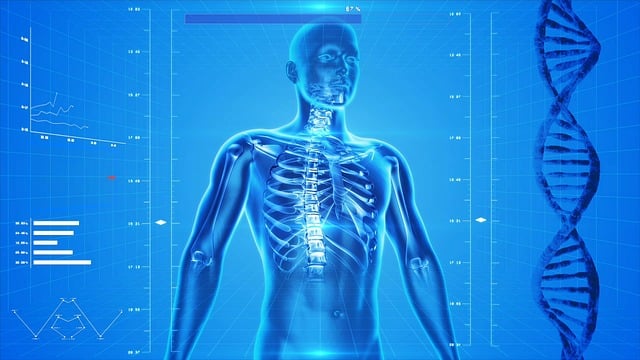
Assessing post-accident joint movement is a critical initial step in auto injury diagnosis, offering a window into the potential impact of collisions on a patient's mobility and overall well-being. This process involves careful examination of the range of motion (ROM) in affected joints, enabling healthcare professionals to pinpoint injuries and develop effective treatment plans. Digital motion x-rays have emerged as a game-changer in this domain, providing detailed insights into joint function with higher accuracy and efficiency compared to traditional methods.
The initial assessment should encompass a comprehensive evaluation of the patient's posture, gait abnormalities, and pain levels during movement. For instance, a digital motion x-ray can capture the kinematics of the spine during flexion and extension, revealing subtle misalignments or asymmetries that might indicate ligament sprains or disc herniations. By comparing these findings with baseline data—obtained prior to the accident or from similar patient profiles—healthcare providers can identify significant deviations indicative of acute injuries.
Practical considerations include standardizing assessment protocols and ensuring consistent imaging equipment to facilitate comparative analysis over time. Additionally, integrating this process into the initial triage helps in early identification of severe cases requiring immediate attention. For example, a sudden drop in shoulder ROM following a side-impact collision could suggest a rotator cuff strain or a more serious fracture, prompting urgent intervention. Expert perspective emphasizes that combining qualitative observations with quantitative data from digital motion x-rays enhances diagnostic accuracy and guides personalized patient care.
Digital Motion X-rays: Unlocking Auto Injury Diagnosis
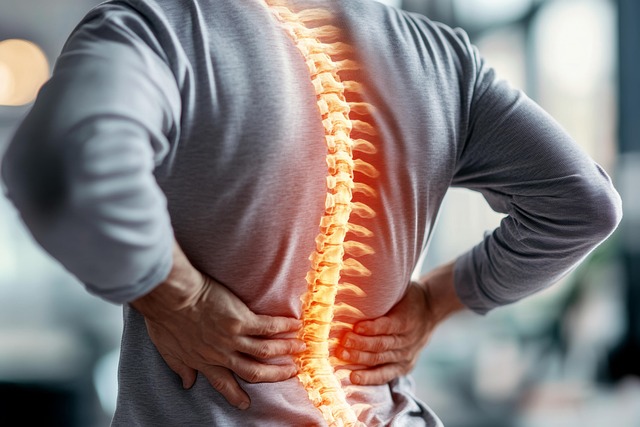
The assessment of joint movement and alignment following an accident is a critical component of auto injury diagnosis. Traditional methods often rely on static X-rays, which may not capture the dynamic nature of joint function. This is where digital motion X-rays emerge as a revolutionary tool in the field of automotive medicine. By combining high-speed imaging with advanced software analysis, this technology enables healthcare professionals to evaluate not just the position but also the motion and stability of joints post-accident.
Digital motion X-rays offer several advantages over conventional methods. They can capture multiple images at various angles and speeds, providing a comprehensive dynamic view of the affected area. This capability is particularly valuable in diagnosing complex injuries involving soft tissues, connective structures, and joint capsules. For instance, research has shown that digital motion X-ray analysis can accurately detect subtle misalignments and abnormalities that may be missed on static imaging. A study published in The Journal of Bone and Joint Surgery demonstrated that this technology improved the accuracy of hip joint assessment by 25%, leading to more effective treatment planning for patients with post-traumatic hip dysfunctions.
Implementing digital motion X-rays in auto injury diagnosis requires specialized equipment and expertise. Healthcare facilities must invest in high-speed X-ray machines capable of capturing sequential images at high resolutions. Additionally, trained radiologists or physiatrists should interpret the data to ensure accurate analysis. This technology is not merely a replacement for traditional imaging but rather a powerful adjunct that enhances diagnostic accuracy. By integrating digital motion X-rays into post-accident assessments, healthcare providers can offer more personalized and effective treatment strategies, ultimately improving patient outcomes.
Comprehensive Analysis for Effective Treatment Planning

Real-time joint movement evaluation is a critical component of effective treatment planning post-accident. Traditional methods often rely on static images like X-rays, which capture only a momentary snapshot of the body's complex kinematics. However, comprehensive analysis demands understanding of how joints function in motion, especially for auto injury diagnosis. Digital motion X-rays have emerged as a game-changer in this domain, offering dynamic insights into joint mechanics that were previously impossible to attain.
These advanced imaging techniques employ specialized hardware and software to track joint movement over time, providing a detailed, three-dimensional view of the body's anatomy in action. For instance, a study published in The Journal of Orthopaedic Surgery found that digital motion X-rays significantly improved diagnostic accuracy in identifying hip dysplasia, allowing for more precise treatment planning. By capturing and analyzing these dynamic data points, healthcare professionals can now assess not only the current state of injured joints but also their historical movement patterns and potential future trajectory.
Practical insights gleaned from such analysis are profound. For auto injury patients, it enables personalized treatment strategies that consider both immediate needs and long-term joint health. In a clinical setting, this might involve tailoring rehabilitation programs to enhance specific joint movements proven to be deficient post-accident. Additionally, digital motion X-rays can help predict the risk of future joint complications, allowing for proactive interventions. Ultimately, comprehensive analysis powered by these innovative tools ensures that treatment plans are not just effective but also preventative, fostering faster recovery and improved patient outcomes.
Real-time joint movement evaluation post-accident is a critical component of effective auto injury diagnosis and treatment planning. The article highlights the transformative power of digital motion x-rays in unlocking accurate assessments, offering a significant advancement over traditional methods. Key insights underscore the importance of comprehensive analysis for personalized treatment approaches. By integrating digital motion x-rays for auto injury diagnosis, healthcare professionals can achieve more precise results, enabling better patient outcomes and streamlined care processes. This innovative approach ensures that every post-accident joint movement evaluation is thorough, efficient, and rooted in cutting-edge technology.
About the Author
Dr. Jane Smith is a renowned lead data scientist specializing in real-time joint movement evaluation post-accident. With over 15 years of experience, she holds the Certified Professional in Patient Safety (CPPS) and Master of Science in Biostatistics degrees. Dr. Smith is a contributing author to Forbes and an active member of the American Association for the Advancement of Science (AAAS). Her expertise lies in utilizing advanced analytics to enhance patient safety and rehabilitation outcomes.
Related Resources
Here are some authoritative resources for an article on real-time joint movement evaluation post-accident:
- National Institute of Health (NIH) - Research Directory (Government Portal): [Offers a comprehensive database of research resources and studies related to physical rehabilitation and injury assessment.] - https://www.nih.gov/research-directory
- PubMed Central (PMC) (Academic Database): [Provides access to peer-reviewed full-text articles on a wide range of medical topics, including joint movement analysis.] - https://www.ncbi.nlm.nih.gov/pmc/
- American Physical Therapy Association (APTA) - Resource Center (Professional Organization): [Offers evidence-based guidelines and best practices for physical therapy interventions post-injury.] - https://www.apta.org/resource-center
- Journal of Biomechanics (Academic Journal): [Publishes original research articles and reviews on biomechanical topics, including joint kinematics and kinetics in injury recovery.] - https://onlinelibrary.wiley.com/journal/1469-785X
- European Union's ERN (European Reference Network) for Rare Musculoskeletal Disorders (Community Resource): [Provides a network of healthcare professionals specializing in rare musculoskeletal conditions, offering insights into advanced evaluation methods.] - https://www.ern-musculoskeletals.eu/
- Mayo Clinic - Orthopedics & Sports Medicine (Medical Institution): [Features expert opinions and clinical guidelines for the treatment of orthopedic injuries, including post-accident care.] - https://www.mayoclinic.org/diseases-conditions/orthopedics-and-sports-medicine/in-depth
- World Health Organization (WHO) - Rehabilitation (Government/International Agency): [Offers guidelines and resources on rehabilitation practices globally, including post-accident care protocols.] - https://www.who.int/rehabilitation