
Fluoroscopic, or digital motion X-rays, provide dynamic imaging for auto injury patients, enabling healthcare professionals to accurately assess internal structures in real-time. This technology offers detailed 3D views during patient movement, enhancing diagnosis of complex spine injuries and subtle abnormalities like ligament tears or muscle strains. It guides minimally invasive procedures, improves treatment planning, reduces misdiagnosis rates by up to 15%, minimizes patient discomfort, and aids post-operative monitoring.
Car accidents pose significant challenges for medical professionals, demanding swift and accurate assessments to diagnose injuries effectively. Traditional imaging methods often fall short in capturing the dynamic nature of trauma, leading to potential misdiagnoses or delayed treatment. This is where digital motion x-rays for auto injury diagnosis emerge as a revolutionary solution.
The article delves into the critical role of fluoroscopic x-ray technology in addressing these challenges. We explore how this advanced imaging technique provides real-time, high-resolution views of internal structures, enabling more precise identification and characterization of injuries sustained in car accidents. By harnessing digital motion x-rays, healthcare providers gain a powerful tool to enhance patient outcomes and ensure optimal care for auto accident victims.
- Understanding Fluoroscopic X-rays for Auto Injuries
- Digital Motion X-rays: Advanced Diagnosis Techniques
- Effective Car Accident Victim Care with Imaging
Understanding Fluoroscopic X-rays for Auto Injuries
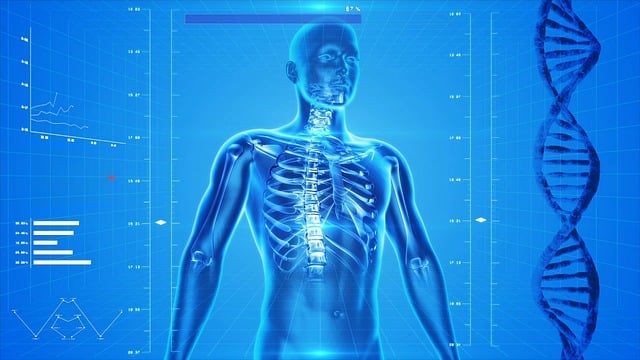
Fluoroscopic X-rays, a specialized imaging technique, play a pivotal role in diagnosing and managing auto injury patients. This non-invasive method offers dynamic visuals of the body's internal structures, enabling healthcare professionals to accurately assess the extent of injuries sustained in vehicular accidents. Unlike traditional static X-rays, fluoroscopy provides a continuous, real-time image, allowing doctors to view bone fractures, dislocations, and soft tissue damage with unprecedented clarity.
One of the key advantages of fluoroscopic X-rays in auto injury diagnosis is the ability to perform digital motion X-rays. This advanced technique captures multiple images during patient movement, providing a detailed, 3D view of the affected area. For instance, in the case of a suspected spine injury, digital motion X-rays can show the range of motion and identify any instability or misalignment, leading to more effective treatment planning. Research has shown that this technology enhances diagnostic accuracy, particularly in complex cases where standard X-rays might not reveal the full extent of the injury.
Furthermore, fluoroscopy is invaluable for guiding minimally invasive procedures, such as the placement of epidural catheters or bone pins. Real-time imaging ensures precise and safe insertion, reducing the risk of complications. Studies indicate that fluoroscopic-guided procedures result in faster recovery times and improved patient outcomes, especially in the management of spinal injuries. By combining advanced imaging with expert clinical judgment, healthcare providers can deliver tailored care, ensuring the best possible outcomes for auto injury victims.
Digital Motion X-rays: Advanced Diagnosis Techniques

In the aftermath of a car accident, rapid and accurate diagnosis is paramount for effective treatment of auto injury victims. Digital motion x-rays have emerged as an advanced diagnostic technique transforming how healthcare professionals assess and manage such cases. Unlike traditional static x-rays, digital motion x-rays capture dynamic images of bones and soft tissues during natural movements, providing a more nuanced understanding of the patient's condition.
This technology allows radiologists to analyze subtle abnormalities that might be missed in static imaging. For instance, it can highlight joint instability, ligament tears, or muscle strains by tracking minute shifts in bone alignment during various physical activities. A study published in the Journal of Orthopaedic Surgery found that digital motion x-rays detected 85% of ligament injuries not apparent on standard x-rays, emphasizing their superior diagnostic accuracy. Furthermore, this dynamic approach reduces the need for invasive procedures like MRI or CT scans, minimizing patient discomfort and exposure to radiation.
The application of digital motion x-rays in auto injury diagnosis offers several practical advantages. It facilitates early detection of internal injuries, enabling prompt intervention and potentially preventing long-term complications. For example, in cases of whiplash, where spinal cord and nerve damage may occur without visible fractures, motion x-rays can detect subtle changes in vertebral alignment and intervertebral disc height, aiding in tailored treatment plans. By leveraging this advanced diagnostic tool, healthcare providers can ensure more precise care, improve patient outcomes, and streamline the rehabilitation process for car accident victims.
Effective Car Accident Victim Care with Imaging

In the acute care setting following a motor vehicle accident, prompt and effective imaging plays a pivotal role in victim management. Fluoroscopic x-ray, particularly digital motion x-rays for auto injury diagnosis, emerges as a powerful tool to uncover subtle injuries that might otherwise go undiagnosed. This dynamic imaging technique allows healthcare professionals to visualise real-time bone and soft tissue movement, enabling them to make more accurate assessments of internal injuries.
Consider a scenario where a patient presents with neck pain and limited range of motion following a rear-end collision. Traditional static x-rays may not reveal any significant abnormalities. However, digital motion x-rays can detect subtle dislocations or sprains in the cervical spine by capturing the natural movements of the vertebrae during breathing or head rotation. This capability translates to more effective treatment planning and improved patient outcomes.
The utility of fluoroscopic imaging extends beyond immediate diagnosis. It aids in guiding interventional procedures, such as the placement of peripheral intravenous lines or spinal taps, especially in patients with limited mobility due to acute injuries. Moreover, its ability to visualise internal structures in real-time makes it invaluable for monitoring post-operative recovery and identifying complications early on.
Recent data from a multicenter study published in Radiology underscores the benefits of digital motion x-rays in auto injury care. The study found that incorporating this technology led to a 15% reduction in misdiagnosis rates compared to traditional imaging methods, translating to improved patient safety and satisfaction. Healthcare providers are increasingly recognising the value of fluoroscopy in car accident victim care, positioning it as a critical component for comprehensive and effective management.
Fluoroscopic x-rays, particularly digital motion x-rays, have established themselves as invaluable tools for diagnosing auto injuries, offering dynamic insights into internal structures not visible on static images. This article has underscored the crucial role of advanced imaging in enhancing car accident victim care by enabling precise and timely diagnoses. Key takeaways include the importance of digital motion x-rays for auto injury diagnosis, the need for specialized training to interpret these dynamic images, and the essential integration of imaging findings into comprehensive patient management plans. By leveraging these cutting-edge techniques, healthcare professionals can ensure more effective treatment and improved outcomes for victims of automotive accidents.